The Long Game: How Agents That Remember Resolve Operational Issues Faster

Editors’ note: Self-Defining Systems is a new paradigm and a new research initiative at the University of Washington with the goal of leveraging the unique abilities of LLMs to accelerate infrastructure agility, while compensating and masking their weaknesses. It envisions a future in which infrastructure can design, validate, and evolve itself with minimal human intervention. … Read more

LDOS: Toward A Learning-Directed Operating System

Editors’ note: LDOS (Learning Directed Operating System) is among the most exciting expedition projects that showcase how AI could help revamp policies and mechanisms of modern operating systems (arguably the most important systems software). In this article (the fifth blog in The Next Horizon of System Intelligence series), the LDOS team shares their vision, roadmap, and … Read more

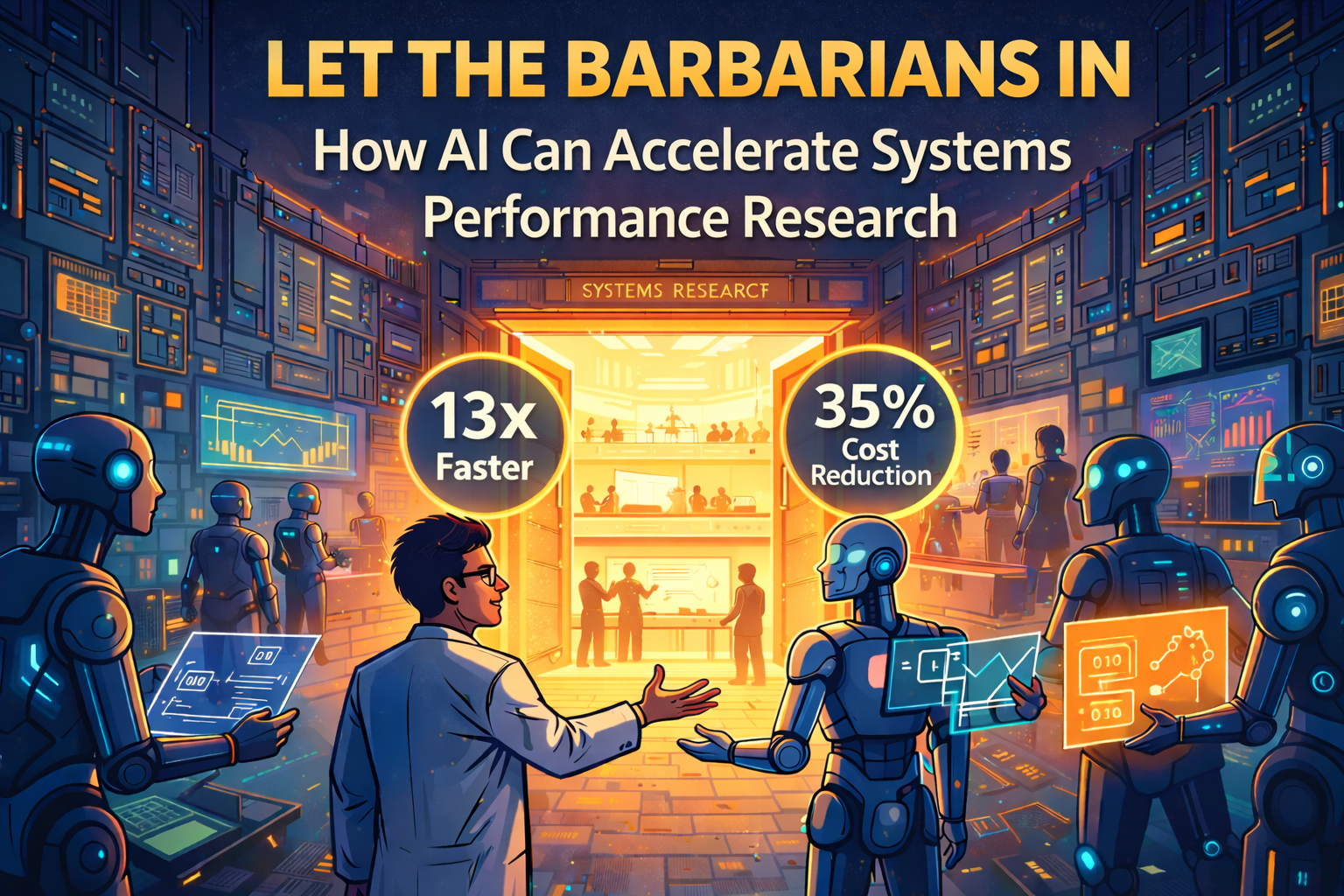
Let the Barbarians In: How AI Can Accelerate Systems Performance Research

Editors’ note: You must remember the widely discussed Barbarians at The Gate article that opened the The Next Horizon of System Intelligence series! For the fourth blog, we welcome back the ADRS team from UC Berkeley to share their recent work that demonstrates how to embrace and utilize AI (as the “barbarians”) to accelerate system performance … Read more

Glia: A Human-Inspired AI for Systems Design and Optimization

Editors’ note: For the third The Next Horizon of System Intelligence series, we invited the Glia team from MIT to share their work on developing human-inspired AI for system design and optimizations. The last blog article defined the ladder of System Intelligence based on the learning experience of PhD students and Glia is such a PhD-level … Read more